

The Need for Sustainable Construction
As global industries face growing environmental challenges and move toward sustainable construction practices, the concept of a circular economy has gained significant traction. This economic model, which contrasts the traditional linear approach of “take, make, dispose,” focuses on extending the lifecycle of materials through reuse, refurbishment, and recycling. By embracing these principles, industries reduce waste, conserve resources, and lower their environmental footprint while maintaining operational efficiency and economic viability.
One powerful application of the circular economy is repurposing end-of-life tires into durable construction materials. Technologies such as Mechanical Concrete® provide a tangible example of how the circular economy can be implemented. This technology repurposes discarded tires into critical infrastructure, giving new life to materials that would otherwise become a significant environmental burden. In this article, we’ll explore how Mechanical Concrete® promotes the circular economy, providing low-maintenance, sustainable construction solutions for industries such as Oil and Gas, industrial facilities, and construction.
The Global Challenge of Tire Waste
The challenge posed by end-of-life tires is immense. According to recent statistics, around 1.5 billion tires are discarded globally each year, with approximately 4 billion tires already stockpiled in landfills or storage worldwide. Due to their durability and chemical composition, tires are non-biodegradable and can persist in the environment for centuries, creating long-term ecological hazards. Improperly managed tire stockpiles are prone to fires, releasing toxic fumes into the atmosphere and taking months to extinguish. Furthermore, abandoned tires become breeding grounds for mosquitoes and pests, causing additional public health concerns.
The environmental impact extends beyond fire hazards. Waste from old tires contaminates soil and groundwater, negatively affecting nearby ecosystems and human health. The persistence of these tires in the environment requires innovative solutions to manage their disposal. The circular economy offers a promising alternative by repurposing these tires into new, valuable products rather than discarding them.
The Circular Economy: Turning Waste into Durable Resources
The circular economy concept provides an ideal framework for addressing the environmental challenges associated with end-of-life tires. This economic model emphasizes the continuous use of resources, promoting a shift away from traditional consumption patterns that treat materials as disposable. By reusing materials and designing products for longevity, industries can reduce their reliance on finite natural resources and minimize waste production.
In the context of construction, the circular economy transforms waste materials—like end-of-life tires—into resources that improve infrastructure durability and sustainability. End-of-life tires, long considered an environmental problem, now represent an opportunity for industries to embrace circular principles. Instead of being sent to landfills or stockpiles, tires can be repurposed into durable materials for infrastructure. Mechanical Concrete®, a patented technology from 3rd Rock Renewables, embodies the circular economy by turning tire-derived materials into strong, long-lasting construction components. By transforming end-of-life tires into new products, industries can minimize their environmental impact while creating resilient infrastructure.
Mechanical Concrete®: Innovative Solution for Sustainable Construction

Mechanical Concrete® is a patented technology that perfectly aligns with circular economy principles. It transforms end-of-life tires into durable construction materials by encasing aggregates inside the structural framework of used tires. This process results in a solid and stable material that can support the weight of infrastructure projects like roads, bridges, and foundations.
This technology not only reduces the environmental burden of disposing of tires but also minimizes the need for traditional, resource-intensive materials such as concrete and asphalt. The structural integrity provided by Mechanical Concrete® makes it an ideal choice for industries requiring low-maintenance construction solutions. As a result, industries like Oil and Gas, industrial facilities, and construction benefit from cost savings, reduced environmental impact, and improved infrastructure longevity.
Environmental and Economic Benefits of Mechanical Concrete®
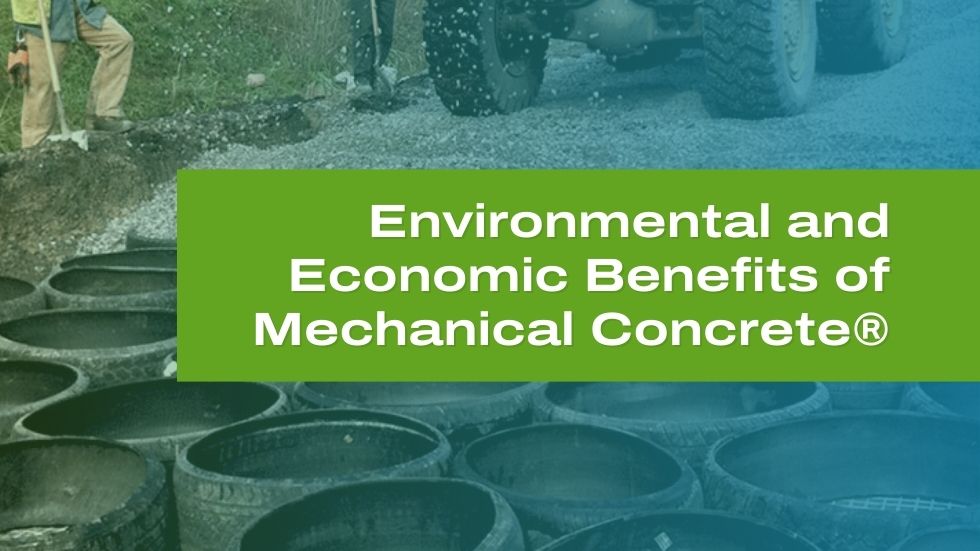
Mechanical Concrete® plays a key role in supporting the circular economy and sustainable infrastructure development. Its benefits extend across various sectors:
1. Durability and Strength
By repurposing end-of-life tires, Mechanical Concrete® delivers superior durability and strength, providing a low-maintenance alternative to traditional construction materials. The confined aggregates form a solid base that virtually eliminates potholes, rutting, and edge erosion, significantly extending the life of roads, bridges, and industrial foundations. This reduced need for repairs translates into long-term cost savings for industries.
2. Reduced Resource Consumption
Using Mechanical Concrete® minimizes the demand for new raw materials. This reduction in resource consumption supports the circular economy by ensuring that existing materials are reused, preventing additional environmental degradation caused by mining or quarrying for natural aggregates.
3. Lower Carbon Footprint
Mechanical Concrete® significantly lowers the carbon emissions associated with infrastructure projects by reducing or eliminating excavation. Furthermore, the durability of Mechanical Concrete® reduces the frequency of repairs and replacements, which also helps cut down on transportation and construction emissions.
4. Improved Environmental Impact
By repurposing discarded tires, Mechanical Concrete® contributes to a cleaner environment by diverting materials from landfills and reducing the risk of tire fires and pollution.
Sustainable Applications of Mechanical Concrete® in Key Industries
1. Oil and Gas Industry
The Oil and Gas sector requires infrastructure that supports heavy equipment, machinery, and constant traffic. By incorporating Mechanical Concrete® into refineries, tank farms, terminals, and drilling site access roads, companies can build more resilient infrastructure to withstand the industry’s demanding conditions. The low-maintenance properties of Mechanical Concrete® help reduce downtime due to repairs, while its circular benefits contribute to the sector’s sustainability goals.
2. Industrial Facilities
Strong, stable infrastructure is paramount in industrial facilities. Mechanical Concrete® delivers the durability needed to support heavy-duty equipment and operations while significantly reducing the need for frequent maintenance and material replacements. This leads to both economic and environmental benefits, as industries can lower their operational costs and reduce their reliance on virgin construction materials.
4. Construction
Mechanical Concrete® is ideal for construction projects that require long-lasting, cost-effective infrastructure solutions. Roads, parking lots, and other infrastructure projects built using this technology enjoy extended lifespans and reduced maintenance needs, which contribute to overall project sustainability. By repurposing end-of-life tires for construction, developers can reduce their environmental footprint while creating stronger, more resilient structures.
4. Paving Companies
Paving companies benefit from Mechanical Concrete® by offering clients roads and surfaces requiring fewer repairs and replacements. The durability of Mechanical Concrete® ensures that paved surfaces can withstand environmental stress and high traffic volumes, making it an attractive choice for clients seeking sustainable construction solutions. In addition, paving companies can market their use of circular economy principles as a competitive advantage in an increasingly eco-conscious marketplace.
Long-Term Circular Construction with Mechanical Concrete®

One of the key advantages of adopting Mechanical Concrete® in a circular economy framework is its ability to create low-maintenance infrastructure. Traditional materials often require frequent repairs due to potholes, erosion and rutting. This cycle of replacement and repair not only consumes resources but also contributes to a larger environmental footprint. By contrast, Mechanical Concrete® is designed to last, significantly reducing the need for ongoing repairs and maintenance.
By extending the life of infrastructure, Mechanical Concrete® reduces the environmental costs associated with extracting and processing new materials. This also lowers the emissions related to transporting and installing replacement materials, helping industries meet their carbon reduction goals. The long-term durability of Mechanical Concrete® supports the circular economy by ensuring that materials remain in use for extended periods rather than being quickly discarded and replaced.
Additionally, the use of end-of-life tires in construction reduces the environmental burden associated with the extraction of virgin materials. Mining and quarrying for aggregates, as well as the production of concrete, have significant environmental impacts, including habitat destruction, water pollution, and high energy consumption. By minimizing these materials with tire-derived products, industries can take an active role in reducing their environmental footprint while maintaining the integrity and performance of their infrastructure.
Conclusion: Building a Circular Future with Mechanical Concrete®
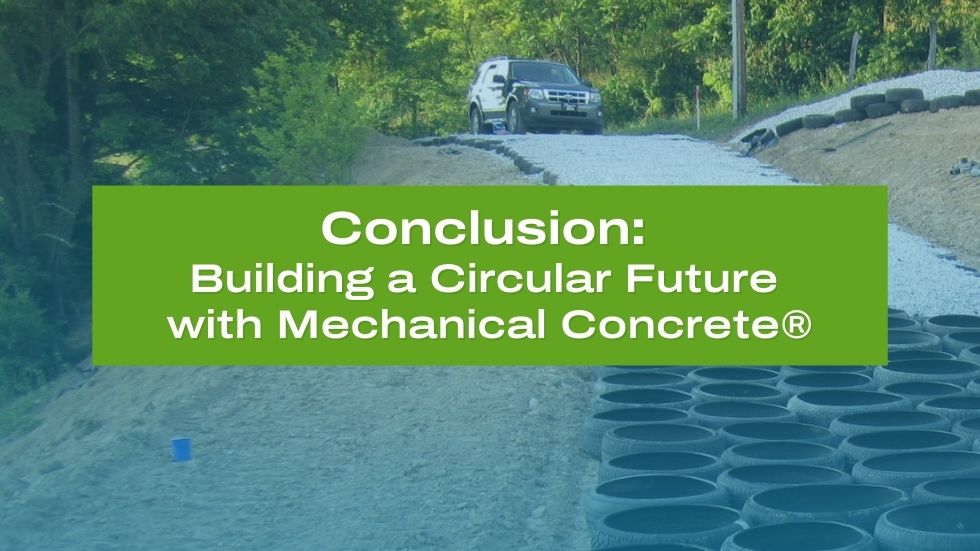
The adoption of Mechanical Concrete® is a significant step toward achieving the goals of the circular economy in the construction industry. By repurposing end-of-life tires into valuable construction materials, this technology offers industries a practical way to reduce waste, conserve resources, and build stronger, more sustainable infrastructure..
As industries like Oil and Gas, industrial facilities, and construction seek to minimize their environmental impact, Mechanical Concrete® provides a clear pathway forward. This technology aligns with global sustainability goals and helps industries improve their operational efficiency and economic resilience.
In a world where sustainability is increasingly essential for long-term success, Mechanical Concrete® stands out as a leader in driving the circular economy. Its ability to transform waste into resources, extend the lifespan of infrastructure, and reduce carbon emissions makes it an indispensable tool for the future of sustainable construction.
To learn more about how 3rd Rock Renewables can help your business embrace the circular economy through Mechanical Concrete®, visit our website and follow us on LinkedIn for updates on new projects and success stories!